Our Story
Since its founding in 1895 by Fernand Mercier, Maison Mercier has been the French leader in mother-of-pearl buttons — a craft passed down through three generations, serving the greatest names in Haute Couture.
A lineage of Master Nacre-workers
- 1870
Origins of the manufacture
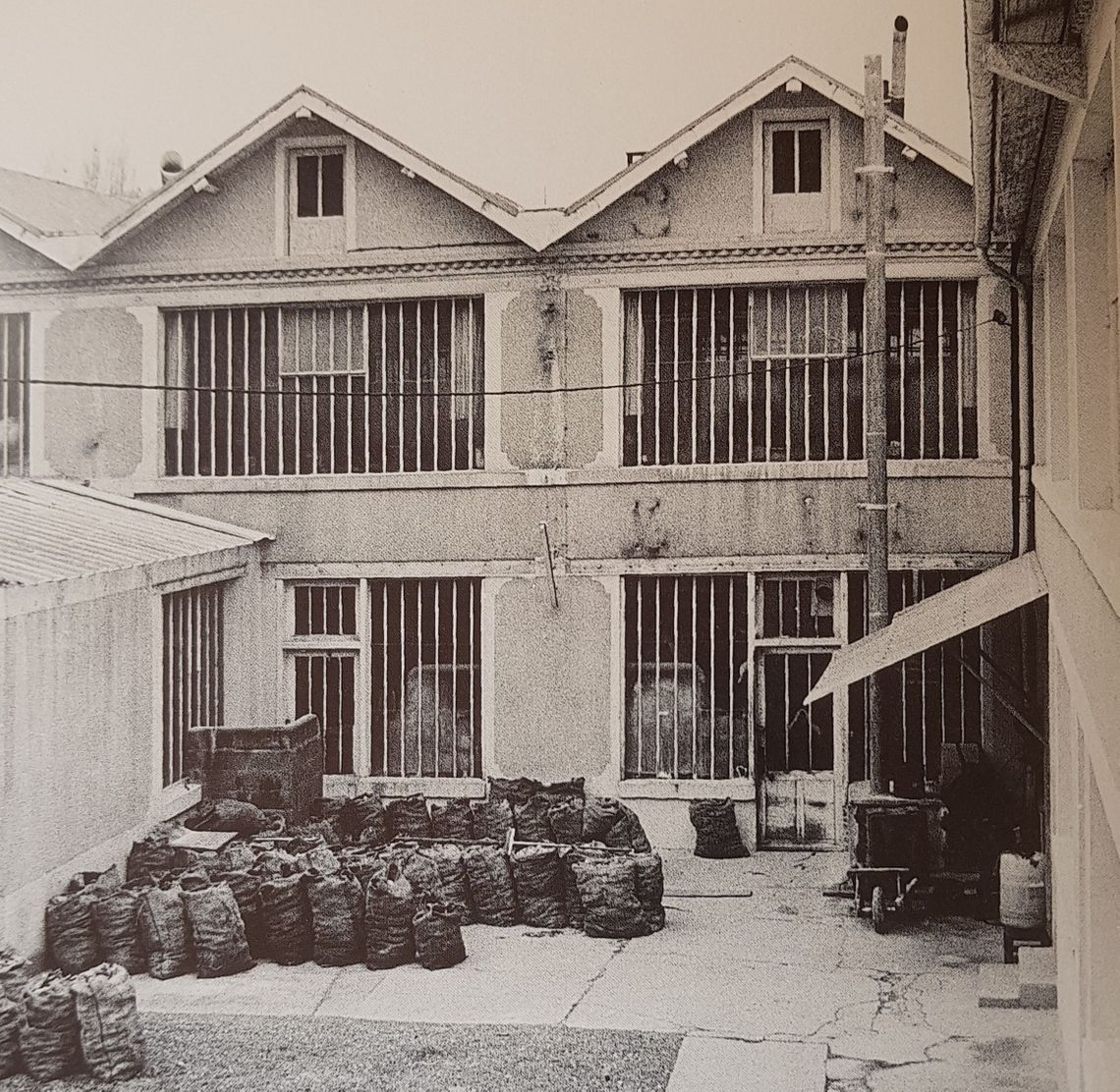
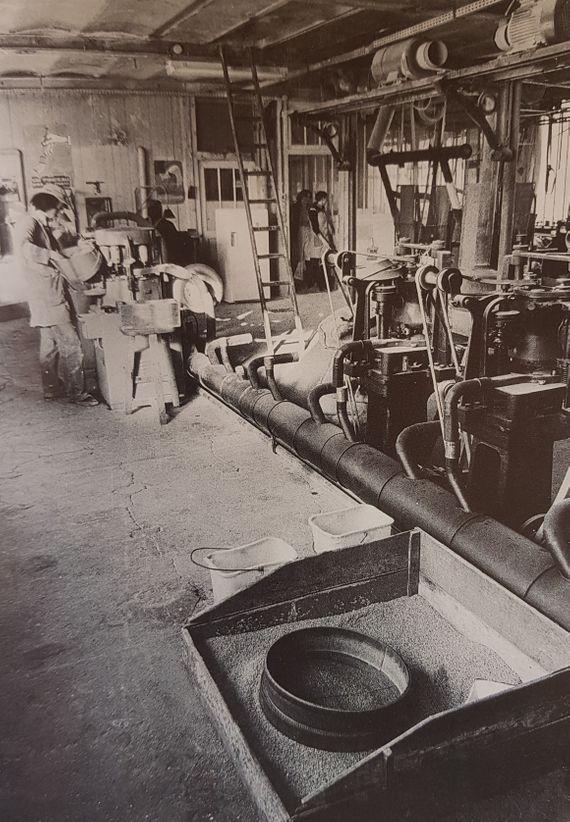
The factory was built in the 1870s by Lesbroussart, a sawmill and bone-turning workshop. Its steam engine powered nearby craftsmen, including Vaquette, a maker of piano sharps.
- 1895
Birth of the Mercier house
The site becomes Fernand Mercier in 1895, then F. Mercier et Cie in 1935 — laying the foundations of a French signature in mother-of-pearl buttons.
- 1937
Founding of Maison Mercier
Fernand Mercier founds Mercier in Méru, the historic capital of the button. His rigorous selection of nacre and the quality of the craft quickly win over the Parisian couture houses, who come to know the brand simply as Maison Mercier
- 1957
The polyester challenge
Mother-of-pearl buttons face the rise of polyester — an almost perfect imitation, far cheaper to produce. The beautiful nacre button, with its shimmering reflections and unique irregularities, nearly disappears.
- 1970
The return of nacre
Nacre returns to favour. Maison Mercier opens a new market by packaging its buttons on display cards for retail, without compromising on quality.
- 1983
François Mercier, third generation
Representing the third generation of Master Nacre-workers, François Mercier takes the helm — determined to perpetuate the tradition in the face of mounting Asian competition.
- 1990s
Production reimagined
It became impossible to keep producing in France at competitive prices. François Mercier chose Madagascar — still untouched by mass industrialisation — to pass on the French craftsmanship inherited from his grandfather.
- Today
Thirty-five years of craft, sustained
For over 35 years, the workshop trained by François Mercier in Madagascar has sustained the Mercier craft in every detail. The design team remain in Méru, France to this day.
A French craft, preserved
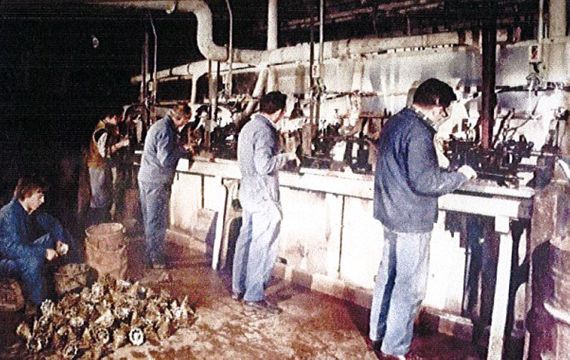
By a deliberate commitment to quality, the bespoke dyeing of nacre, packaging and shipping all remain in Méru. It is here, in the historic cradle of the French button, that every piece receives its finish before reaching the couture ateliers.